The NCLEX Clinical Judgment Model: What It Is and How to Practice It
Understand the NCSBN Clinical Judgment Measurement Model (CJMM) that drives the Next Generation NCLEX. Learn the 6 cognitive skills tested and how to practice each one.
The NCLEX Clinical Judgment Model: What It Is and How to Practice It
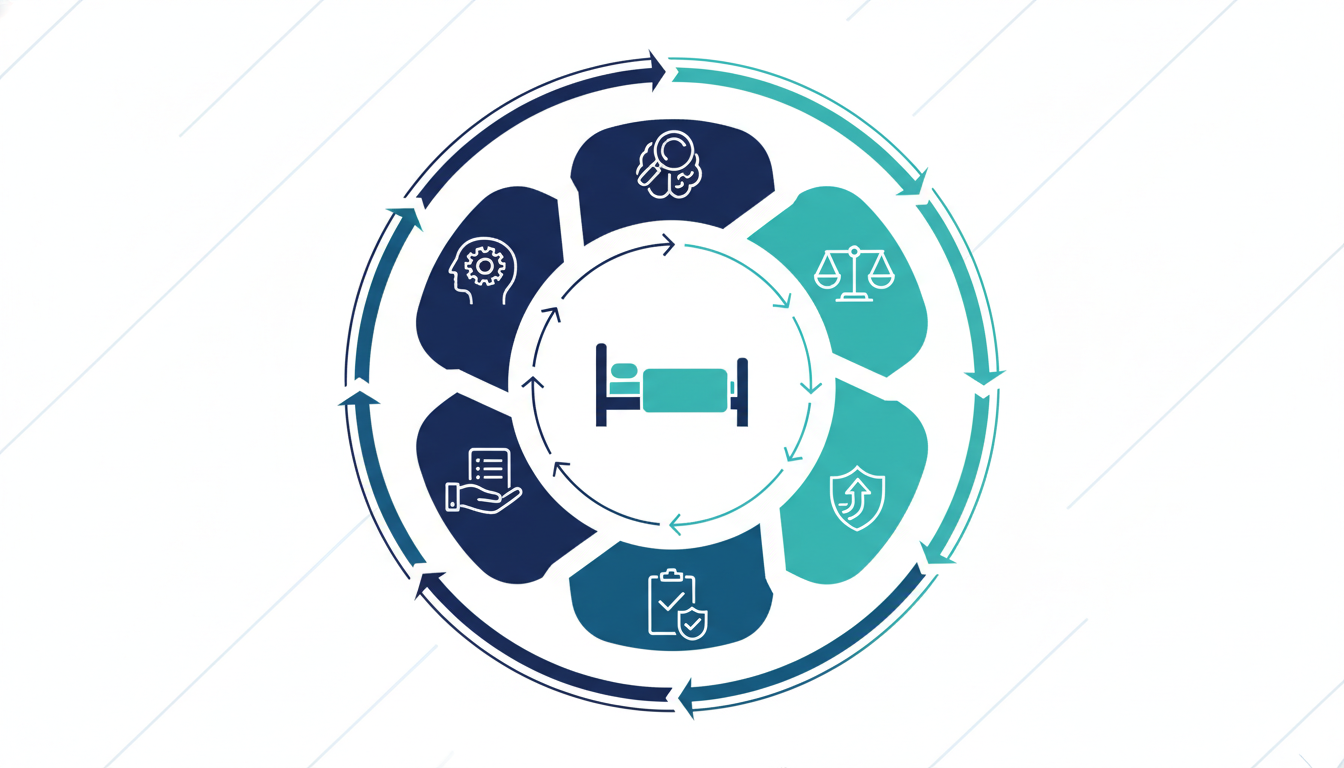
The Next Generation NCLEX (NGN) is built around one central concept: clinical judgment. The NCSBN Clinical Judgment Measurement Model (CJMM) defines exactly what the exam is testing. Understanding this model gives you a framework for how to think through any NCLEX question.
What Is Clinical Judgment?
Clinical judgment is the process nurses use to make decisions about patient care. It's not memorization — it's the ability to recognize relevant information, analyze it, prioritize actions, and evaluate outcomes.
The NCSBN defines it through six cognitive skills that form a cycle.
The 6 Cognitive Skills
1. Recognize Cues
What it means: Identify relevant information from the patient's presentation, history, vital signs, lab values, and assessment findings.
NCLEX tests this by: Presenting a patient scenario and asking what findings are significant or abnormal.
How to practice: When reviewing patient scenarios, practice distinguishing relevant from irrelevant information. Not every detail in the question stem matters — learn to filter.
2. Analyze Cues
What it means: Connect the cues to potential conditions or complications. What do these findings suggest?
NCLEX tests this by: Asking you to interpret assessment data, lab results, or changes in patient condition.
How to practice: For any set of symptoms, practice generating a differential: "These findings are consistent with..." Think about what's expected vs. unexpected for a given condition.
3. Prioritize Hypotheses
What it means: Determine which potential explanation is most likely and most urgent. Not all problems are equal.
NCLEX tests this by: Presenting multiple concerns and asking which takes priority, or which patient to see first.
How to practice: Use ABCs (Airway, Breathing, Circulation) and Maslow's hierarchy to rank problems. The most physiologically threatening issue comes first.
4. Generate Solutions
What it means: Identify the appropriate nursing interventions for the prioritized problem.
NCLEX tests this by: Asking what actions the nurse should take, what orders to expect, or what interventions are appropriate.
How to practice: For each condition you study, know the first-line nursing interventions. What do you do immediately? What do you monitor? What do you prepare for?
5. Take Actions
What it means: Implement the chosen interventions correctly and in the right order.
NCLEX tests this by: Ordered response questions (put these actions in sequence), or questions about proper technique and procedure.
How to practice: Practice sequencing interventions. Assessment comes before intervention. Stabilization comes before documentation. Life-threatening problems come before everything else.
6. Evaluate Outcomes
What it means: Determine whether your interventions worked. Is the patient improving, stable, or declining?
NCLEX tests this by: Asking which finding indicates improvement, which finding requires follow-up, or which outcome is expected after an intervention.
How to practice: Know the expected outcomes of common interventions. If you gave an antihypertensive, what blood pressure indicates it's working? If you repositioned a patient, what finding confirms improved respiratory status?
How NGN Question Types Map to the Model
| Question Type | Cognitive Skills Tested |
|---|---|
| MCQ | Any single skill |
| SATA | Recognize Cues, Generate Solutions |
| Ordered Response | Prioritize Hypotheses, Take Actions |
| Cloze/Drop-Down | Analyze Cues, Evaluate Outcomes |
| Matrix | Recognize Cues, Analyze Cues |
This is why the NCLEX uses multiple question types — each format tests different aspects of clinical judgment.
Practicing Clinical Judgment (Not Just Content)
Content review alone won't prepare you for clinical judgment questions. A low-stakes way to start is a free NCLEX practice test with rationales — then build from there. You need to practice the thinking process:
Case-Based Practice Work through full patient scenarios from admission to outcome. Tools like NurseReady's clinical patient simulator (nurseready.app) put you in scenarios where you assess a patient, make decisions, and see the consequences — practicing all 6 cognitive skills in one session.
Question Rationale Analysis After every practice question, don't just check if you got it right. Ask: - What cues did I need to recognize? - What was I supposed to analyze? - How should I have prioritized? - What action was correct and why? - What outcome would I expect?
Think Aloud Practice When working through practice questions, verbalize your reasoning. "The patient has these symptoms, which suggest this condition. My priority is airway because... The first action should be... I'd expect to see improvement in..."
This externalized reasoning builds the habit of systematic clinical thinking.
Common Clinical Judgment Mistakes
Jumping to intervention without assessing. The NCLEX loves to test whether you assess before you act. If "assess the patient" is an option, it's often correct.
Picking the most dramatic action. Calling a rapid response or giving an emergency medication feels like the "right" answer, but it's often premature. Match the severity of your intervention to the severity of the situation.
Forgetting to evaluate. After implementing an intervention, the nursing process doesn't end. You evaluate. Questions that ask "which finding indicates the treatment is effective?" test this skill.
Key Takeaway
The NCLEX Clinical Judgment Model isn't a mysterious framework — it's the same process you used in clinical rotations. Recognize what's wrong, figure out why, decide what's most urgent, act on it, and check if it worked. Every NGN question tests some part of this cycle. Practice the thinking, not just the facts.
Practice what you just learned
2,000+ NCLEX questions with AI explanations. All 5 NGN question types. Free to start.
Start Practicing Free